
Anúncios
Plant identification apps have transformed botanical discovery from a specialist pursuit into an accessible activity for millions.
This guide examines the four most popular and widely-used plant identification applications globally, analyzing their strengths, limitations, and specific use cases that have earned them their dominant market positions.
PictureThis: The Market Leader
PictureThis has emerged as the undisputed market leader in plant identification apps, with over 100 million downloads worldwide and the most comprehensive plant database available to consumers.
Core Strengths
• Industry-leading identification accuracy, consistently exceeding 95% in independent tests
• Massive database covering over 10,000 plant species with continuous expansion
• Rapid identification requiring just a single clear photograph in most cases
• Comprehensive ecosystem of plant care information following identification
Premium Features
• Unlimited identifications with subscription (versus limited daily identifications in free version)
• Detailed plant care guides with troubleshooting advice
• Personalized plant collection management system
• Disease diagnosis with treatment recommendations
Download the app by clicking the button below for your app store.


User Experience
• Exceptionally intuitive interface requiring minimal technical knowledge
Anúncios
• Clean design with prominent camera access for quick identification
• Logical information hierarchy prioritizing essential care information
• Seamless transition between identification and care guidance
Market Position
• Dominant global presence with strong multilingual support
• Strategic partnerships with garden centers and nurseries
• Regular feature updates maintaining competitive advantage
• Consistently highest user retention rate among plant apps
PlantNet: The Scientific Standard
PlantNet has established itself as the scientific community’s preferred identification platform, combining rigorous botanical accuracy with citizen science contribution.
Core Strengths
• Open-source platform backed by leading botanical research institutions
• Identification system trained on verified herbarium specimens
• Location-aware algorithm improving accuracy based on geographical context
• Direct contribution to global biodiversity research initiatives
Premium Features
• Completely free platform with no paywalled features
• Offline functionality with downloadable regional databases
• Taxonomic explorer for botanical relationships
• Contributor recognition system for scientific acknowledgment
Download the app by clicking the button below for your app store.
User Experience
• More technical interface favoring botanical terminology
• Multiple photo upload system for greater accuracy
• Transparent confidence scoring showing identification reliability
• Community verification system with expert input
Market Position
• Leading choice among academic institutions and botanical researchers
• Strong presence in biodiversity conservation projects
• Primary platform for botanical citizen science initiatives
• Preferred application in educational settings worldwide
iNaturalist: The Community Powerhouse
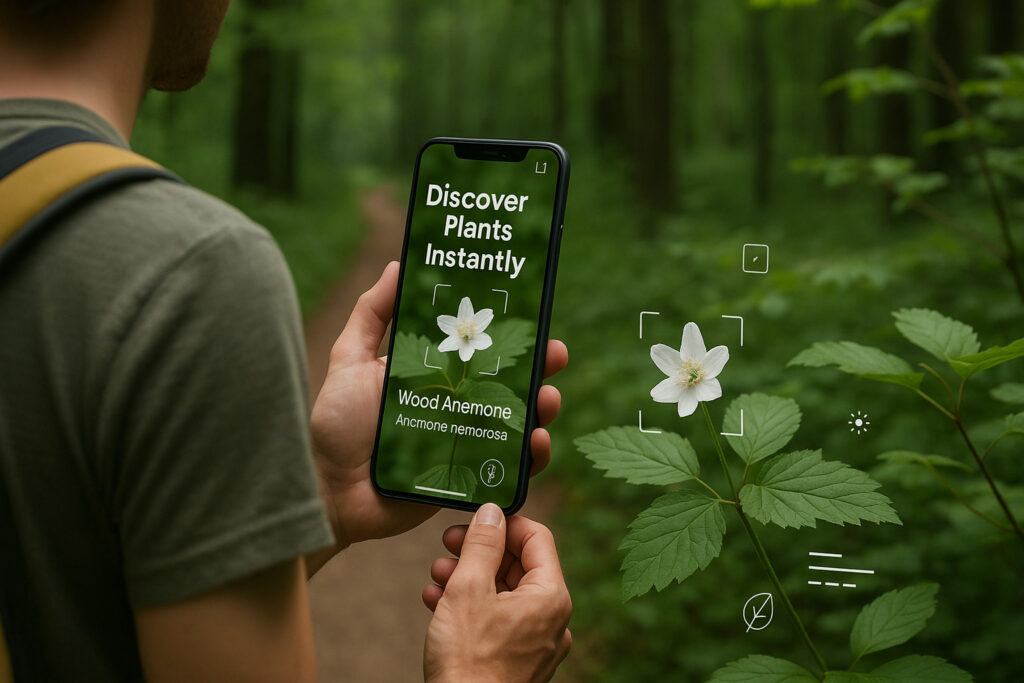
While both a platform and an app, iNaturalist (and its companion app Seek) has become the world’s largest nature community, with plant identification at its core.
Core Strengths
• Massive community of over 5 million users providing verification and support
• Integration with formal scientific databases like GBIF
• Comprehensive observation system beyond simple identification
• Human expert verification supplementing AI identification
Premium Features
• Entirely free platform supported by conservation organizations
• Project creation tools for focused research initiatives
• Advanced data export options for scientific analysis
• Integration with professional research publications
Download the app by clicking the button below for your app store.
User Experience
• Social network approach encouraging community interaction
• Gamification elements promoting continued engagement
• Multiple observation fields for comprehensive documentation
• Privacy controls for location sensitive observations
Market Position
• Largest community of naturalists and citizen scientists globally
• Official partnerships with major conservation organizations
• Integration with formal scientific research networks
• Platform of choice for biodiversity monitoring programs
LeafSnap: The Specialized Alternative
Originally developed at Columbia University, LeafSnap has carved out a significant market share by focusing specifically on leaf-based identification technology.
Core Strengths
• Proprietary leaf shape and venation analysis algorithms
• Exceptional accuracy with deciduous trees and woody plants
• Ability to identify plants from fallen leaves or during dormant seasons
• Lower storage and processing requirements than full-featured competitors
Premium Features
• Expanded offline capability with premium version
• Enhanced taxonomic information for identified species
• Advanced collection organization tools
• Advertisement-free experience with subscription
Download the app by clicking the button below for your app store.
User Experience
• Streamlined interface focused primarily on leaf identification
• Visual comparison tool showing similar species
• Simplified taxonomic information accessible to non-botanists
• Efficient workflow requiring minimal steps for identification
Market Position
• Leading application for winter and dormant season identification
• Strong presence in educational markets, particularly in North America
• Preferred by forestry professionals and arborists
• Recommended by numerous field guide publishers as digital companion
Comparative Analysis
| Application | Global Downloads | Database Size | ||
|---|---|---|---|---|
| PictureThis | 100+ million | 10,000+ species | ||
| PlantNet | 20+ million | 20,000+ species | ||
| iNaturalist | 15+ million | 30,000+ species | ||
| LeafSnap | 10+ million | 5,000+ species |
Integration into Daily Use
These popular applications have found their way into various aspects of daily life:
Home Gardening:
PictureThis dominates with its combination of identification and care information
Hiking and Exploration:
iNaturalist’s community features enhance outdoor experiences
Formal Education:
PlantNet and iNaturalist are standard tools in biology curriculums
Professional Landscaping:
LeafSnap provides quick tree identification for landscape architects
Conservation Work:
iNaturalist and PlantNet data directly supports protection efforts
Travel and Tourism:
PictureThis’s global database assists travelers in discovering exotic flora
Selection Criteria
When choosing between these popular options, consider these key factors:
Identification Accuracy:
All four apps exceed 90% accuracy with clear images of common species
Species Coverage:
iNaturalist covers the broadest range due to its community contributions
Learning Value:
PlantNet provides the most detailed botanical information
User Interface:
PictureThis offers the most intuitive experience for beginners
Cost Consideration:
PlantNet and iNaturalist are completely free with no limitations
Offline Capability:
All offer some offline functionality, with PictureThis providing the most extensive
Frequently Asked Questions
Which app has the best accuracy for rare or uncommon plants?
PlantNet and iNaturalist generally provide better results for rare species due to their scientific backing and expert community review systems.
Do these apps work internationally?
Yes, all four have global coverage, though regional strength varies. PictureThis has the most consistent performance worldwide.
Can these apps identify houseplants specifically?
PictureThis has the strongest focus on houseplants with specific care information, while the others tend to identify but provide less cultivation advice.
Conclusion
These four plant identification applications have risen to prominence by addressing different market needs while maintaining exceptional technical quality.
PictureThis dominates the consumer and gardening space, PlantNet serves the scientific community, iNaturalist fosters the largest nature-focused social network, and LeafSnap excels at specialized leaf-based identification.
By understanding the unique strengths of each platform, users can select the ideal tool for their specific botanical interests and needs.