ads
You shouldn’t sacrifice your privacy or safety for a chance to connect on any platform.
Many daters encounter issues like catfishing, account takeovers, and scams off the app. These scams use personal information and trust against you.
A good dating app uses verification, strong authentication, and in-app protections. These measures help lower risks before they can affect you.
With the right app and habits, video dates and AI moderation become enjoyable. Plus, location check-ins are safe and easy.
This review highlights the most important dating app security features. It also explains how to use them for safer connections in 2025.
Choose a dating platform that prioritizes safety as a key feature, not just a marketing slogan.
Apps like Tinder, Bumble, and Hinge have profile verification and blocking tools. They also have reporting features and active moderation that are enforced.
Lock your accounts with in-app messaging, strong passwords, and 2FA. This keeps conversations secure within the dating app.
Before meeting, use video chat to check identities. Then, choose a public place for your first date and inform a friend about your plans.
Modern tools like panic buttons and discreet reporting are helpful. Location sharing through apps like Find My Friends or Life360 also enhances safety.
Be aware of red flags, says matchmaker Anna Morgenstern. These include pressure to move conversations off-app and refusal to video chat.
Pew Research reports about 30% of U.S. adults have used dating apps. This makes strong security measures essential.
Adopt easy habits for safety: verify profiles, limit alcohol, control your transportation, and listen to your instincts if something feels wrong.
Understanding the Concept: Old Way vs New Way of Online Dating Safety
Before, online dating meant trusting someone quickly. Profiles lacked proof, and conversations quickly moved to texting. Now, safety is key in dating apps. They focus on verified profiles, secure accounts, and regular checks before meeting.
Why the shift? Safe dating apps mix identity checks with new tools. They use photos and videos to make sure matches are real. Messaging within the app ensures there’s a record for reporting issues. These steps help fight scams and fake profiles.
Using strong passwords and two-factor authentication (2FA) helps keep your account safe. It’s smart to meet in public places and let a friend know your plans. If a profile seems too perfect, do a reverse image search. These strategies are most effective with a dating app’s built-in safety features.
Companies are updating their safety features. Tinder and Bumble now have photo verification. Hinge uses video to help confirm who you’re talking to. Apple and Google have added extra security, like passkeys and 2FA, to help protect your account.
| Aspect | Old Way | New Way | Benefit to Users |
|---|---|---|---|
| Identity Proof | Minimal checks; easy to spoof | Verified dating profiles with photo/video steps | Fewer catfishing attempts; faster trust |
| Messaging | Quick move to SMS/WhatsApp | In‑app chat with reporting and moderation | Clear trail for action against abuse |
| Account Security | Weak, reused passwords | Unique passwords plus 2FA and passkeys | Lower takeover risk and better control |
| First Meet | Private settings, vague plans | Public venues, shared check‑ins, own transport | Reduced personal risk during meetups |
| Vetting | Trust at face value | Reverse image search and light background checks | Early detection of scams or false claims |
| Platform Role | Hands‑off moderation | Clear dating app security measures and safety centers | Faster removals and better guidance |
Online dating is now safer thanks to a multi-layered approach. Safe apps combine human insight with tools for spotting dangers early. With verified profiles and strong security, dating online has become more secure and trustworthy.
Hooking Into 2025 Trends: Video-First Dating, AI Matchmaking, and Safer Virtual Connections
Online dating is evolving with more visuals and better filters. Many people now use apps that need to be safe for everyone. Look for apps that mix video chats, smart learning, and quick support for a stress-free experience.
The shift is clear: real profiles, live video chats, and quick problem-solving make dating reliable. A good dating app is easy to use and keeps you safe, without making things hard.

Video chat as identity confirmation before meeting
Start with a quick video call on the app. It helps confirm if the person looks like their pictures, reducing catfishing. Tinder, Bumble, and Hinge have video features to help you get to know someone safely.
Start conversations with simple topics: their day, something from their bio, and see how they respond. Combine this with verified profiles for more security.
AI-driven moderation to flag scams and inconsistencies
Advanced systems look for signs of scams or bad behavior in profiles and messages. This keeps dating apps safer for everyone. When something seems off, humans review it quickly, making the app safer.
Good signs include: quick removal of fake profiles, alerts about fishy phrases, and reminders to keep talks in the app. These steps keep dating chats real without blocking good conversations.
In‑app safety centers, panic buttons, and discreet reporting
Leading apps provide a safety area with easy advice, quick reporting options, and silent tools. Panic buttons offer immediate help, and keeping reports within the app is important, especially when someone tries to move the chat elsewhere.
Use these features along with sharing your location through apps like iPhone Find My or Life360 before meeting. The aim is to make sure profiles are real, alerts are smart, and support is quick. This way, high-tech tools offer real safety on dating platforms.
Workflow: How to Vet a Secure Dating Platform and Use It Safely
Start with trust, then verify. First, pick trusted apps like Tinder, Bumble, and Hinge. Look for signs they’re safe like clear rules against harassment, someone checking profiles, and verification symbols. This helps choose a platform that really cares about your safety.
Next, look into each app’s safety features. They should have steps on what to do if there’s trouble, a button for emergencies, and a way to report bad behavior easily. These features show the app can help quickly if something bad happens.
Now, secure your account. Choose a strong, unique password and turn on two-factor authentication (2FA). This is very important for keeping your information safe online.
Before sharing anything on your profile, adjust your privacy settings. Make it so only certain people can see your profile and contact you. Don’t share too much about your personal life, like where you work or your daily schedule. Using strong privacy settings and wise sharing practices keeps you safer.
To make sure your matches are real, look for profiles with verification badges. Consider a quick video chat or even a reverse image search if something seems off. Keep talking through the app until you feel sure about someone. Don’t rush to switch to other messaging apps like WhatsApp or Telegram.
Choosing a place to meet is important. Pick somewhere public and meet during the day. Plan how you’ll get there and back yourself. Tell someone you trust about your plans, and think about sharing your location with an app like Find My Friends or Life360.
Be on the lookout for warning signs. This includes anyone asking for money, stories that don’t add up, or someone who won’t video chat. Drink responsibly, keep an eye on your drink, and set personal boundaries. If at any point things don’t feel right, it’s okay to leave.
If you decide to share your number, think about using a secondary one, like Burner. The most important thing is to trust how you feel. If you ever feel uneasy, use the app’s block and report feature. These steps help keep dating online safe while protecting your information.
- Shortlist Tinder, Bumble, and Hinge with strong verification, moderation, and anti‑harassment policies.
- Assess the safety hub for clear guidance, panic features, and fast, simple reporting.
- Enable a unique password and 2FA to harden logins.
- Set privacy controls, limit visibility, and avoid oversharing.
- Verify matches with badges, a quick video chat, and reverse image search if needed.
- Keep conversations in‑app until credibility is established; resist off‑app pressure.
- Plan public, daytime meetups and manage your own transport.
- Inform a trusted contact and consider live location sharing.
- Monitor red flags: money asks, story gaps, no video, or no public meeting.
- Set limits on alcohol; leave if uncomfortable.
- Use a secondary number if early phone contact is necessary.
- Trust your instincts; block and report immediately when uneasy.
| Step | Action | Why It Matters | Security Focus |
|---|---|---|---|
| Shortlist | Choose Tinder, Bumble, Hinge with proven policies | Starts with a secure dating platform, not guesswork | Platform vetting |
| Safety Hub | Check panic features and reporting pathways | Faster help and clear escalation | Response readiness |
| Account Lockdown | Unique password + 2FA | Stops account takeover | Login defense |
| Privacy Setup | Limit visibility and contact rules | Reduces exposure | Protecting user information |
| Match Verification | Badges, video chat, reverse image search | Filters impostors | Identity assurance |
| In‑App Chat | Delay WhatsApp/Telegram | Keeps records and controls | Safety containment |
| Public Meet | Daytime venue, own transport | Improves personal safety | On‑ground protocol |
| Trusted Contact | Share plans or live location | Adds oversight | Real‑time backup |
| Red Flags | Spot money asks, story gaps, no video | Early threat detection | Risk screening |
| Limits | Cap alcohol; exit if uneasy | Keeps control | Boundary setting |
| Secondary Number | Use Burner if sharing early | Masks personal data | Privacy layer |
| Block/Report | Act at first sign of discomfort | Stops escalation | Enforcement tools |
Key Options: Security Features to Prioritize in a Secure Dating Platform
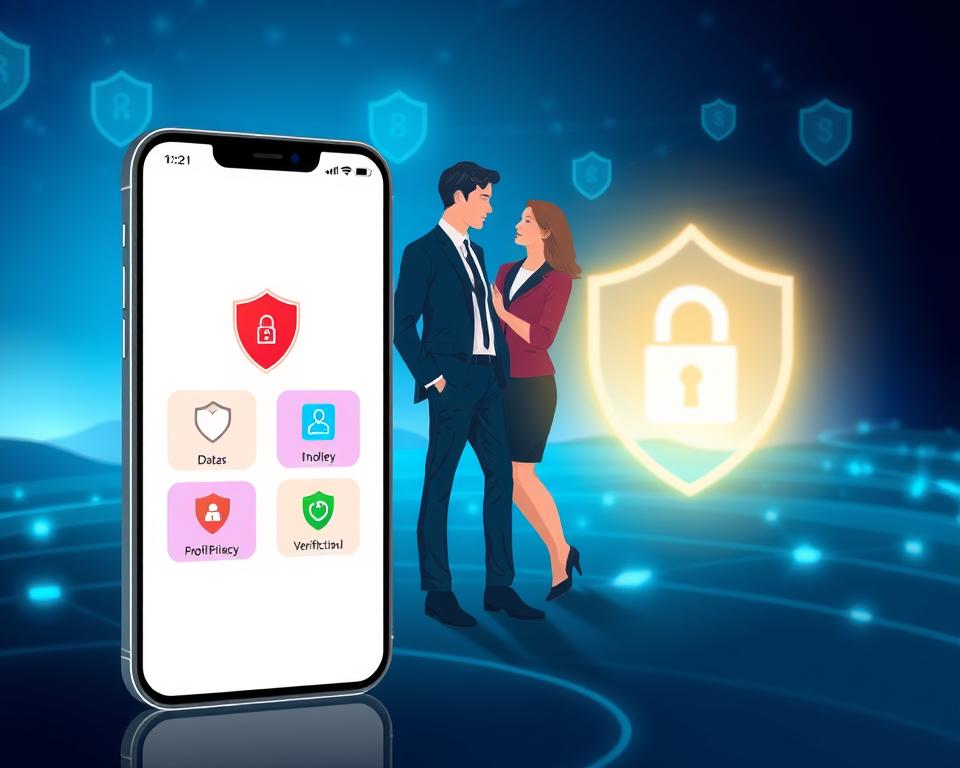
A safe dating app begins with strict identity verification. Look for dating profiles that are verified with selfie videos and document checks. This happens on Tinder, Bumble, and Hinge. Such measures greatly lower the risk of fake accounts, building trust from the start.
Access to accounts should have multi-factor authentication, alerts for new devices, and support for passkeys. These steps protect against unauthorized access and alert you to logins from new devices. They also keep an eye out for signs of phone cloning and odd IP addresses.
Privacy settings should be strict from the get-go. Only show general locations, blur pictures until there’s a match, and let you choose who sees when you’re online. Once dating profiles are confirmed genuine, the app can use limits on messages and fight spam without affecting real chats.
Chat safety is key. With in-app reports, moderators, and AI checks, the app catches dangerous behavior. It looks out for threats like grooming, extortion, or dubious investment offers. Users get clear warnings when moving chat outside the safe platform.
It’s important to fight scams in payments too. The platform should recognize typical scam patterns, show warnings about fraud, and prevent asking for money or gift cards. Checking images fast can reveal if a photo is stolen.
Choose platforms that clearly explain their verification, protection, and response tactics. Ensure they update these details as their features grow.
| Feature | What to Look For | Why It Matters | Examples on Major Apps |
|---|---|---|---|
| Identity Verification | Video selfies, biometric checks, visible badges, periodic rechecks | Supports genuine dating profiles and stops catfish | Tinder Photo Verification, Bumble Photo Verification, Hinge selfie prompts |
| Login Security | Passkeys or 2FA, device history, alerts on suspicious logins | Prevents unauthorized account access | Passkey rollouts on Tinder and Google-backed 2FA standards |
| Privacy Controls | Location fuzzing, photo blurs, hidden read receipts, block list | Maintains privacy in dating without oversharing | Bumble Incognito, Hinge photo controls, solid block/report features |
| Content and Behavior Moderation | 24/7 human review plus AI flags for scams and harassment | Builds trust and removes harmful users faster | Match Group’s AI filters, teams for manual reviews |
| On-App Safety Tools | Panic buttons, date check-ins, location sharing, fast reporting | Helps users from their first message to their first date | Garbo background checks on Tinder (U.S.), Noonlight integration |
| Anti-Fraud Education | Tips during chat, scam alerts, blockers for money requests | Reduces scams and financial risks | Warnings about risky transactions in-app |
| Photo Integrity | Reverse image searches, checking metadata, finding duplicates | Stops the use of stolen or altered photos | Automated and manual photo checks on top platforms |
| Transparency | Detailed safety information, stats on enforcement, policy updates | Shows how platforms handle reports and protect users | Safety info available from Tinder, Bumble, and Hinge |
“Trust grows when platforms verify identity, guard privacy by default, and act fast on abuse. Those pillars turn features into real protection.”
safe dating app Feature Checklist: Must-Haves You Should Never Ignore
Choose a platform that puts online dating safety first, not just in words but in action. The right app combines verified profiles with solid security to make you feel safe from the start.
Use this quick checklist to compare options before you sign up or share info.
Verified profiles with visible badges and rechecks
An app should ask for a live photo or a short video, then show a badge to prove you’re real. It should also recheck profiles regularly to prevent fake ones from sneaking in. Combine this with a reverse image search to catch stolen photos early.
Look for apps that tell you how they check profiles. Brands like Match Group and Bumble are clear about their verification steps and when a profile was last checked. This makes online dating safer.
Default privacy safeguards and granular controls
Start with an app that keeps things like your last name and exact location private by default. Your details should be yours to share on your terms.
Choose an app that lets you control who sees your profile. You can even select settings to show your profile only to verified users. These options make dating safer without holding you back.
Robust moderation, fast reporting, and content review
Pick services that monitor things all the time and remove bad content quickly. Being able to report someone with just one tap keeps the conversation as evidence. It also stops scammers from moving the chat off the app too soon.
A good app uses humans and AI to check reports quickly. This helps keep the app safe for everyone, whether you’re just browsing or chatting daily.
Clear anti-fraud policies and education on romance scams
Apps should teach you to recognize scam signs, like being rushed to another messaging app or sudden money problems. In-app tips and regular alerts make things clearer when you’re unsure.
Choose apps that have easy-to-understand rules and examples of scams. They should remind you to keep all transactions within the app. This ongoing advice helps keep online dating safe and keeps genuine profiles in focus.
Efficiency: Why These Security Measures Work, With Data-Backed Rationale
A secure dating platform works best when it’s easy to use, quick, and tough for scammers. Having lots of users also helps. This way, safety measures can protect many people at once.
Proof over promises is the key idea. For online dating to be safe, there need to be clear safety checks, strong sign-in protection, and wise choices when meeting for the first time.

Platform reputation correlates with investment in safety and moderation
Big U.S. dating apps like Tinder, Bumble, and Hinge show they’re serious about safety. They invest in things like verifying users and reviewing reports. This shows they’re trustworthy. A well-moderated app usually has fewer fake profiles.
Security measures on these apps can work for many users. When bad reports are dealt with quickly, scammers have less opportunity. This makes online dating safer for everyone.
2FA meaningfully cuts account‑takeover risk across online services
Two‑factor authentication really helps against password theft. If a hacker gets your password, this second step can still keep them out.
Always use 2FA if you can. It’s a great practice for keeping your chats, photos, and payment info safe on dating sites.
Public first meetings and friend notifications mitigate first‑date risk
Choosing a public spot for first dates is smart. It means there are people around if you need help. Letting a friend know your plans or sharing your location with them provides an extra layer of safety.
These strategies help you avoid being alone or rushed. They work well with app safety features like panic buttons. This boosts your safety when meeting someone.
Reverse image search catches “too‑perfect” or stolen photos
A reverse image search can show if a profile’s pictures are suspicious. If you find the same photo in different places online, be careful.
This method works well with checking profiles’ verification status. Together, they make it easier to confirm someone’s identity before you leave the dating app.
| Measure | Primary Benefit | How It Improves Safety | Best Use Case |
|---|---|---|---|
| Reputation + Moderation | Fewer fake accounts | Rapid review reduces scam exposure for users | Choosing a secure dating platform with visible enforcement |
| Two‑Factor Authentication | Blocked account takeovers | Second factor stops unauthorized logins | Protecting messages and payments on any app |
| Public First Meeting + Friend Alert | Added oversight | Witnesses and quick help lower first‑date risk | Daytime meetups with shared location |
| Reverse Image Search | Identity validation | Flags stolen or stock photos used in catfishing | Screening “too‑perfect” profiles before chatting |
Mix these security measures for stronger protection. Prioritize safety by combining app features with smart dating habits.
Red Flags and Deal Breakers in Online Dating Safety
To stay safe, notice red flags early. A good dating app will clearly show you these warnings. It will also help you date safely with features like verified dating profiles. Plus, keeping chats in the app helps protect your online dating safety.
If you’re unsure, take it slow. Choose a dating app that keeps a record of reports and checks identities. This makes sure your chats can be followed. This way, scams are less likely to happen.
Pressure to move off‑app quickly (e.g., WhatsApp, Telegram)
Moving to WhatsApp or Telegram too quickly can be risky. It takes away the app’s safety net. For top online dating safety, it’s better to stick to platforms that focus on safe online dating practices and offer verified dating profiles.
Refusal to video chat or meet publicly
Avoiding a video chat is a sign of a catfish. Even a short chat on FaceTime or Google Meet can prove someone’s real. Always pick a safe dating app that pushes for verification and suggests meeting in public places during the day.
Inconsistent stories or overly dramatic emergencies
Be alert to changing job stories, sudden trips, or emergencies. These are scam tactics. Double-check their stories. Use dating apps that push for verified dating profiles to stay safer.
Requests for money or sensitive information
Never say yes to requests for money, gift cards, or personal banking info. Always keep your payment information private. Stick to safe online dating practices and quickly report any suspicious accounts within your safe dating app.
| Red Flag | Why It Matters | Safer Move | Supportive App Feature |
|---|---|---|---|
| Push to WhatsApp/Telegram | Removes audit trail and bypasses moderation | Stay in‑app until trust is earned | Secure messaging, easy reporting |
| No video or public meeting | Hides identity and enables catfishing | Request a short video chat first | Video prompts, identity checks |
| Inconsistent stories/emergencies | Designed to rush decisions | Pause, verify details, set boundaries | Profile history, verified dating profiles |
| Money or data requests | Leads to financial or identity theft | Decline and report immediately | Fraud education, reporting shortcuts |
Protecting User Information: Smart Privacy Habits for a Safe Online Dating Experience
Strong privacy habits make a dating app safe and trustworthy. Start by keeping your information private from the start. Use dating practices that protect your identity until you’re sure you can trust someone.
Small steps add up: Use unique passwords, two-factor authentication (2FA), and chat within the app. These practices make meeting someone safer, without sharing your whole life.
Delay sharing full name, phone number, and address
Begin by only sharing your first name. Keep your last name, phone number, workplace, and address a secret until their identity is proven. Use the app’s chat feature so you can report suspicious behavior.
Reverse-lookup tools can find out a lot from a phone number. By waiting, you protect your info and avoid risks outside the app.
Use secondary numbers or privacy tools before trust is established
Use a service like Burner or Google Voice for early calls or texts. This keeps your real number safe, prevents unwanted attention, and allows you to end contact safely if needed.
Combine this with a dating app that lets you block others and capture proof of bad actions. A safe dating app and a backup number make dating online safer.
Limit social media exposure that reveals location or routines
Don’t use geotags or post in real time until you’ve checked out the person you’re talking to. Stay away from sharing your friend list, places you often go, or photos that show your living place.
Review your old posts for hints about your routine, then tighten your privacy settings. Protecting your info means also being careful with what strangers can see on your social media.
| Risk | What Can Leak | Smart Move | Benefit |
|---|---|---|---|
| Early phone sharing | Full name, address history, linked accounts | Use a secondary number and stay in‑app | Less exposure, easier blocking, clear records |
| Oversharing on social | Daily routes, workplace, hangouts | Remove geotags; delay real‑time posts | Harder to track or ambush your routine |
| Password reuse | Account takeover across services | Unique passwords + 2FA on the app | Stronger account lock against breaches |
| Moving off‑app too soon | Loss of moderation and audit trail | Keep chats inside the safe dating app | Faster reporting on a secure dating platform |
Best Practices for Safe Virtual Dating: From First Chat to First Coffee
Start your online dating journey safely by following good habits. Make sure your actions align with security features found in apps like Tinder, Bumble, and Hinge. See every step, from the first message to meeting for coffee, as a chance to ensure safety within the app.
Use the tools provided by the app from the beginning. Verification badges, report functions, and video calls within the app are key for confirming someone’s identity. Keep conversations light and straightforward at first. Then, decide if it’s right to meet in person.
Stay in‑app until identity feels credible
Message and call within the safe confines of the app until you’re sure of the other person’s consistency and verified status. Use the app’s video feature for identity confirmation. If you feel uneasy, it’s okay to stop the interaction and report it. These steps are essential for protecting your personal information and getting help when necessary.
Set personal boundaries and communicate expectations early
Be clear about your expectations from the start, like keeping it casual or avoiding late-night meet-ups. Also, hold off on sharing too much personal information. Setting these limits early is key to safe online dating. It creates a secure environment. And if someone tries to overstep, it’s important to stand your ground firmly but politely.
Plan daytime, public venues and control your own transportation
Pick a busy spot like a popular coffee shop for your meeting. Plan your own transportation, whether you drive, use a rideshare, or public transit. Also, tell a friend about your plans and share your location using Apple Find My or Life360. These steps ensure your safety as you transition from online to in-person dating.
Cap alcohol and watch your beverage
Limit yourself to a couple of drinks and always keep an eye on your beverage. If you start feeling sick or think someone has messed with your drink, ask for help and get out of there. This approach helps you stay safe by maintaining your awareness and control.
| Step | Action | Why It Helps | Tool or Feature |
|---|---|---|---|
| First chats | Stay in‑app and use profile verification | Keeps records and filters impostors | In‑app video, verified badges |
| Before meeting | State boundaries and confirm plans in writing | Reduces pressure and confusion | Chat transcripts, safety center tips |
| Meetup setup | Pick daytime, public locations and self‑managed transport | Improves visibility and exit options | Maps, rideshare, location sharing |
| On‑site | Limit alcohol and monitor your drink | Maintains awareness and control | Bartender support, friend check‑ins |
| Afterward | Debrief with a friend and report issues | Flags risks and protects others | Report button, block tools in a safe dating app |
Make these actions a regular part of your dating routine. Following these safe online dating practices, along with the dating app’s security features, makes the journey from first chat to a coffee date consistent, respectful, and safe.
Best Dating App for Safety: What to Look For in Top U.S. Platforms
When choosing a dating app, check its trust, privacy, and how quickly it responds. Top apps like Tinder, Bumble, and Hinge have clear rules, good verification, and tips for meeting safely. These help keep you safe from the start to your first in-person meeting.
Use a buyer’s lens: read app store reviews about safety, look for apps that re-verify users often, and choose ones that share how they handle bad behavior. Stay away from apps that don’t share their policies or take too long to help users.
Transparent safety policies and visible enforcement
A great dating app has clear anti-harassment rules and shows how it deals with reports. It should let you block users easily, report issues with a single tap, and confirm when action is taken. Bumble, Tinder, and Hinge make their community guidelines clear and update you when you report someone.
Seeing these policies shows the app cares about keeping you safe. When you can see what happens to rule breakers and how the app moderates content, you feel more secure.
Comprehensive verification and anti‑harassment tools
A safe app will check photos and videos, show trust badges, and check regularly. Not doing a quick video verification is a warning sign. Tinder, Bumble, and Hinge fight fake profiles and catfishing with their verification methods.
Having strong tools to stop harassment is important too: quick actions on reports, filtering messages, blurring photos from strangers, and blocking unwanted images. Features allowing you to call or video chat within the app help you feel safer before meeting up.
Education hubs with up‑to‑date scam guidance
The best apps offer safety advice in simple words, have panic buttons, and give tips for meeting safely. They share warnings about romance scams and the importance of consent, updating their advice as new scams appear. They also suggest how to stay safe, like suggesting a video chat before your date.
Look for easy ways to report scammers, reminders to keep conversations within the app until you trust the person, and suggestions for video chats before meeting. Features that let you share your location with friends add an extra layer of safety without sharing where you live.
- Quick checks: visible verification badges, one‑tap reporting, and status updates after you flag issues.
- Safety in flow: voice/video calls, date reminders, and nudges to meet in public during the day.
- Privacy clarity: easy controls for who sees your profile, and clear data practices you can read in minutes.
When all these elements come together, the safest dating app feels easy and peaceful. That’s how a good dating app focuses on real connections while keeping your time and personal info safe.
Summary: Your Action Plan for Safe Online Dating Practices
Start by picking the right platform. Go for a dating app that’s known for its safety, like Tinder, Bumble, or Hinge. They check users well and keep the app safe. They also keep up with the latest, like using videos and AI to catch risks early.
Make your account strong before matching. Create a unique password and use two-factor authentication (2FA). Stick to chatting in the app. Don’t be pushed to use WhatsApp or Telegram. A quick video chat can confirm someone’s identity. Also, if a profile pic looks too good to be true, check it online.
Meet safely by following some rules. Choose a busy place in the daytime and handle your transportation. Let someone you trust know where you’ll be. Apps like Find My Friends or Life360 can share your location with them. Hold off on giving out personal details and use an app like Burner for calls. Drink less, listen to your instincts, and be ready to block or report weird vibes.
Be alert for warning signs and act quickly. Refusing to video chat, telling stories that don’t add up, sudden crises, or asking for money are all bad signs. By sticking to these guidelines and using a secure app, you’re making safety your priority in dating. This gives you the confidence to find the right match.