
Anúncios
The ability to identify plants instantly has transformed how we connect with nature around us.
From casual hikers to dedicated botanists, everyone can benefit from these powerful digital tools.
This guide evaluates four outstanding plant identification applications, each offering unique capabilities for different types of plant enthusiasts in 2025.
PlantNet: The Scientific Community Platform
PlantNet continues to lead the scientific community with its robust approach to collaborative plant identification and research.
Identification Approach
• Visual recognition system drawing from over 20,000 plant species globally
•Location-aware identification that improves accuracy based on geographical context
• Multi-part plant analysis examining leaves, flowers, fruits, and bark separately
• Community verification system with botanical expert review
Anúncios
Distinctive Advantages
• Completely free platform supported by research institutions
• Direct contribution to scientific botanical databases
• Exceptional accuracy with native and wild plant species
• Detailed taxonomic information with scientific naming conventions
Download the app by clicking the button below for your app store.


Practical Limitations
• Interface prioritizes scientific users over casual plant enthusiasts
• Multiple plant part photographs required for highest accuracy
• Less comprehensive coverage of horticultural varieties and hybrids
• Learning curve steeper than consumer-focused alternatives
Research Applications
• Integration with global biodiversity monitoring initiatives
• Climate change impact tracking through distribution changes
• Invasive species alerting system with regional monitoring
• Academic citation system for research publications using collected data
Blossom: The Home Gardener’s Assistant
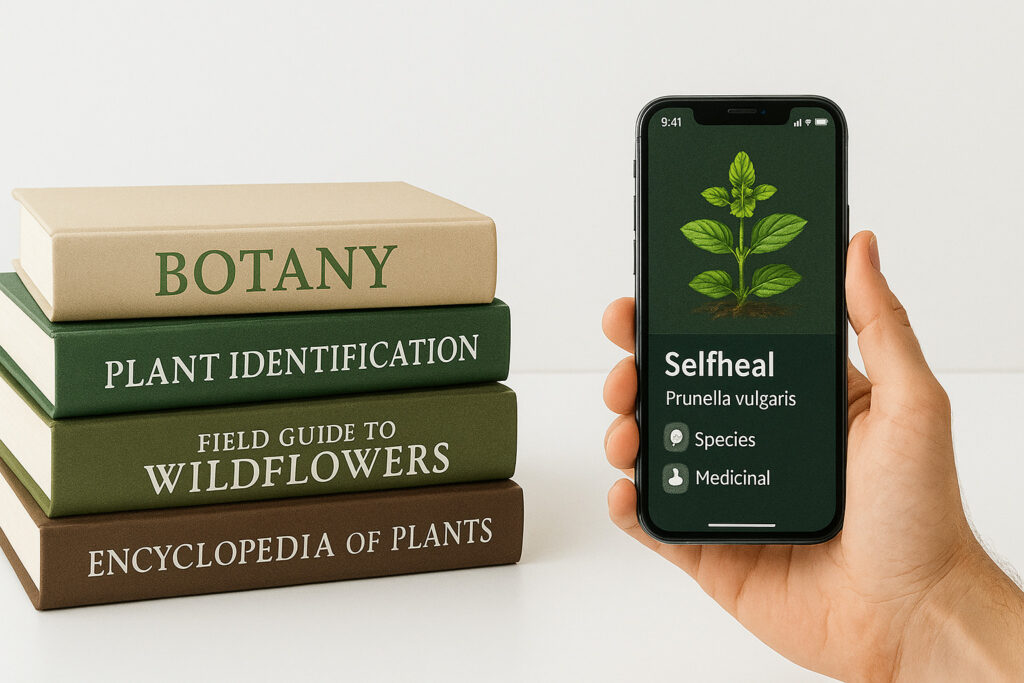
Blossom transforms plant identification into practical gardening knowledge with its comprehensive care-oriented approach.
Identification Approach
• Garden-focused recognition system prioritizing common ornamental species
• Disease and pest identification alongside plant recognition
• Growth stage analysis with developmental tracking
• Soil and environmental compatibility assessment
Distinctive Advantages
• Extensive care guides customized to specific growing conditions
• Watering and maintenance scheduling based on species and local climate
• Troubleshooting wizards for common plant health issues
• Seasonal management recommendations for optimal growth
Download the app by clicking the button below for your app store.
Practical Limitations
• Premium features require subscription after limited free identifications
• Wild plant coverage less comprehensive than garden varieties
• Regional variations in plant care recommendations
• Requires regular engagement for personalized care features
Garden Management Features
• Virtual garden planning with identified plants
• Seasonal reminder system integrated with phone calendar
• Plant grouping recommendations based on care needs
• Growth progress tracking with photographic timeline
Seek by iNaturalist: The Family Explorer’s Tool
Seek provides an accessible, privacy-focused approach to plant identification that makes botanical discovery engaging for all ages.
Identification Approach
• Real-time identification without requiring account creation
• Gamified discovery system with achievement badges
• Multi-kingdom identification including plants, animals, and fungi
• Age-appropriate content filters for educational use
Distinctive Advantages
• Privacy-centric design that minimizes data collection
• Child-friendly interface perfect for family nature exploration
• Gamification elements that encourage outdoor engagement
• Connection to global biodiversity records with educational context
Download the app by clicking the button below for your app store.
Practical Limitations
• Less detailed botanical information than specialist plant apps
• Limited to more common and easily recognizable species
• Requires good lighting conditions for optimal performance
• Simplified taxonomic information for accessibility
Educational Features
• Structured challenges for progressive learning
• Classroom-ready activities for educators
• Species collection “badges” motivating continued exploration
• Safety features limiting location sharing for younger users
Planta: The Houseplant Specialist
Planta has carved a specialized niche focusing exclusively on indoor plants with comprehensive care and management tools.
Identification Approach
• Dedicated indoor plant recognition system covering over 10,000 houseplant varieties
• Light level analysis using device sensors to evaluate growing conditions
• Pot size and material compatibility assessment
• Growth pattern prediction based on specific varieties and conditions
Distinctive Advantages
• Unmatched accuracy with indoor and houseplant varieties
• Room-by-room plant management system
• Light requirement mapping for optimal plant placement
• Specialized care routines for rare and exotic houseplants
Download the app by clicking the button below for your app store.
Practical Limitations
• Minimal outdoor and wild plant identification capabilities
• Full functionality requires premium subscription
• Detailed care features need regular app interaction
• Limited community features compared to other platforms
Indoor Specialization
• Light meter tool using phone camera sensors
• Humidity and temperature recommendations by plant and room
• Propagation guidance with step-by-step instructions
• Toxicity information for pet and child safety
Feature Comparison
| Application | Specialization | User Level | Subscription | |
|---|---|---|---|---|
| PlantNet | Scientific/Wild | Advanced | Free | |
| Blossom | Garden/Outdoor | Intermediate | Paid | |
| Seek | Educational/Family | Beginner | Free | |
| Planta | Indoor/Houseplant | All Levels | Paid |
Optimal Usage Scenarios
Different identification scenarios call for different tools:
Botanical Fieldwork:
PlantNet provides scientific accuracy and taxonomic detail
Home Garden Management:
Blossom offers comprehensive care guidance and seasonal planning
Family Nature Excursions:
Seek makes plant discovery accessible and engaging for all ages
Indoor Plant Collection:
Planta delivers specialized information for houseplant success
Botanical Education
Combination of Seek for engagement and PlantNet for depth
Travel and Hiking:
PlantNet’s offline capabilities and geographic specialization
Photography Best Practices
Achieve the most accurate identifications with these techniques:
Capture defining features:
Focus on distinguishing characteristics specific to each plant
Include size references:
Place a coin or ruler in frame to demonstrate scale
Document multiple parts:
Photograph leaves, flowers, stems, and overall growth pattern
Control lighting conditions:
Avoid harsh shadows and overexposure
Consider seasonal appearance:
Note how plants may look different throughout growing seasons
Frequently Asked Questions
How reliable are plant identification apps compared to traditional field guides?
Modern apps achieve 80-95% accuracy for common species with good photographs, comparable to an intermediate botanist using field guides.
Can these apps identify plants from pressed specimens or cuttings?
Yes, though accuracy decreases. Planta works best with cuttings, while PlantNet can handle pressed specimens with reasonable success.
Do I need botanical knowledge to use these applications effectively?
No prior knowledge is required, though understanding basic plant terminology improves the experience, especially with PlantNet.
Conclusion
These four plant identification applications represent diverse approaches to botanical discovery.
Whether you’re drawn to PlantNet’s scientific depth, Blossom’s gardening focus, Seek’s family-friendly exploration, or Planta’s houseplant specialization, the right tool can significantly enhance your relationship with the plant world.
By selecting the app that best matches your specific interests and needs, you can transform casual curiosity into meaningful botanical knowledge.